Wildlife and Birding in South America’s Last Wild Frontier
The Best of Guyana
January 29 to February 10, 2028
 Private Trip Available
 Safari Overview
SOLD OUT
This Trip Is Fully Booked
Spots do open up! Submit a Trip Inquiry at the top of this page to join our waitlist and we’ll notify you if space becomes available.
Waitlist priority is first come, first served • No commitment required
Journey deep into the heart of one of South America’s last truly great wildernesses, where more than 85% of the country remains cloaked in pristine rainforest and vast savannahs. With over 850 bird species and 45+ Guiana Shield endemics, Guyana is one of the world’s finest birding destinations. Guided by expert naturalists, you will search for many specialties, including the Guianan Cock-of-the-Rock, Capuchinbird, and endangered Red Siskin, while also watching for giant anteaters, giant otters, jaguars, and black caimans. Travel by boat along remote rivers, explore the rainforest from canopy walkways high above the forest floor, and stand in awe of Kaieteur Falls, the world’s most powerful single-drop waterfall. Throughout the journey, you’ll experience something increasingly rare in modern travel: vast wild landscapes with few, if any, other visitors. At many of the places we explore, our group is likely to be the only one there — creating an intimate, unhurried experience of nature that is becoming exceptionally difficult to find anywhere in the world.
WHY CHOOSE THIS TRIP?
- Search for South America’s Rarest Birds: Spot Guiana Shield endemics and near-mythical species like Capuchinbird, Red Siskin, Guianan Cock-of-the-Rock, and many others.
- Experience Untamed Wilderness: Explore pristine rainforests, white-sand forests, and open savannahs teeming with life — often with no other visitors in sight.
- Encounter Big Wildlife: Look for jaguars, giant anteaters, sloths, monkeys, and giant otters in their natural habitats.
- Visit Kaieteur Falls: Witness one of the world’s most powerful waterfalls, plunging 226 meters into the Amazon forest in near-complete solitude.
- Travel Sustainably: Stay at comfortable, community-run lodges that support local conservation and livelihoods.
TRIP MAP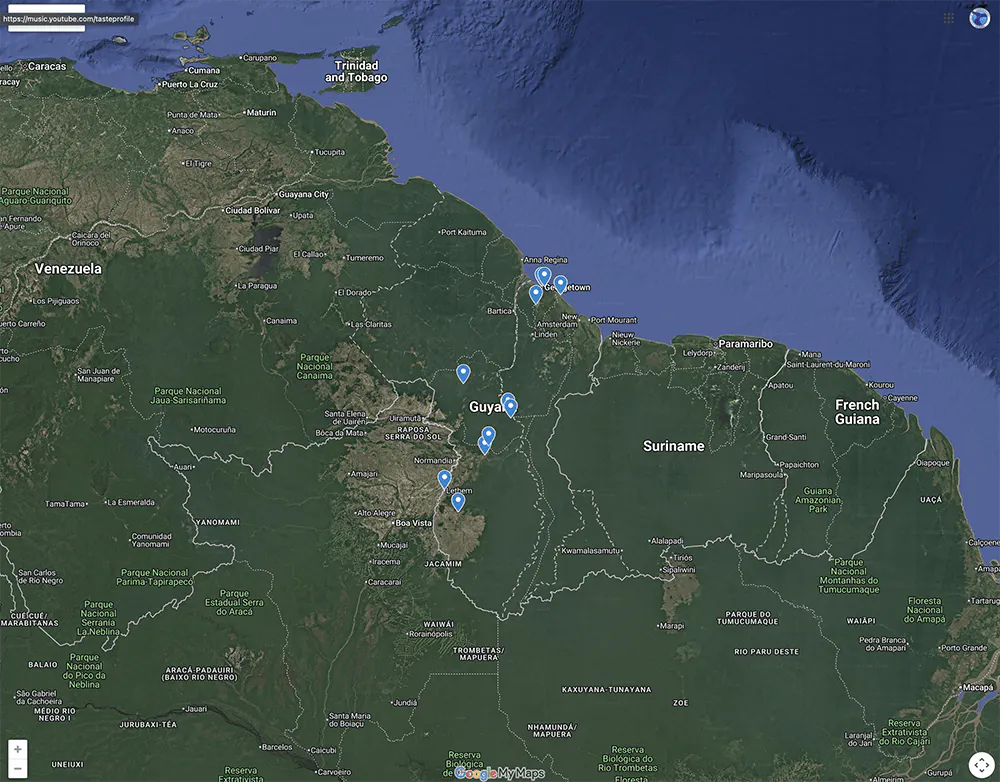
NOTABLE EXPERIENCES
 |  |
Itinerary Updated: July 2026

FAQ
| Date | Description | Lodge | Meals |
|---|---|---|---|
| Jan 29 | Travel to Georgetown, Guyana. Make your way to Guyana's English-speaking capital on the Atlantic coast in preparation for the expedition ahead. | ||
| Jan 30 | Arrive in Georgetown. Transfer from the airport to charming, colonial-era Cara Lodge in the heart of Georgetown. Settle in and rest up — early mornings begin tomorrow. | Cara Lodge, Georgetown | |
| Jan 31 | Mahaica River & Georgetown Botanical Gardens. Begin at 5:00 a.m. with a river cruise along the Mahaica River in search of the Hoatzin, Guyana's prehistoric national bird, then spend the afternoon exploring the species-rich Georgetown Botanical Gardens. | Cara Lodge, Georgetown | B |
| Feb 1 | Georgetown to Manari Ranch. Take a morning flight to the South Rupununi, then head out by 4x4 across open savanna to search for the endangered Hoary-throated Spinetail, Rio Branco Antbird, and the spectacular Guianan Cock-of-the-Rock at an active lek. | Manari Ranch, Rupununi | B, L, D |
| Feb 2 | Search for the Red Siskin. A 4:00 a.m. departure takes you deep into the South Rupununi to Sand Creek village, where the critically endangered Red Siskin — one of the rarest birds in South America — was rediscovered in 2003. | Manari Ranch, Rupununi | B, L, D |
| Feb 3 | Journey to Karasabai. Travel through the Rupununi savanna watching for giant anteaters and diverse waterbirds, visit Karasabai to search for the rare Sun Parakeet, then continue to Rock View Lodge for afternoon birding in gallery forest. | Rock View Lodge, Karasabai | B, L, D |
| Feb 4 | Rupununi River Birding. Spend a full morning on the Rupununi River by boat, targeting giant river otters, the elusive Crestless Curassow, five kingfisher species, and the Rusty-breasted Nunlet before an afternoon of macaws, manakins, and hummingbirds near the lodge. | Rock View Lodge, Karasabai | B, L, D |
| Feb 5 | Into the Iwokrama Rainforest. Make one of the trip's most dramatic ecological transitions — from open Rupununi savanna into the dense, unbroken canopy of Amazonian rainforest — with a dedicated stop at the Guianan Cock-of-the-Rock lek and an evening search for the White-winged Potoo. | Atta Lodge, Iwokrama | B, L, D |
| Feb 6 | Canopy Walkway. Spend a full day on the Iwokrama Canopy Walkway and surrounding white-sand forest, with platforms rising 30 meters above the forest floor offering extraordinary views of cotingas, puffbirds, manakins, and Guianan specialties found nowhere else on earth. | Atta Lodge, Iwokrama | B, L, D |
| Feb 7 | Deeper into the Rainforest. Travel to Iwokrama River Lodge on the banks of the mighty Essequibo River, birding along the way before an afternoon on the Bushmaster Trail in search of Capuchinbird, Spotted Antpitta, and other deep-forest specialties. | Iwokrama River Lodge, Iwokrama | B, L, D |
| Feb 8 | Final Birding in Iwokrama. Choose between a boat crossing to white-sand forest habitat — with cotingas, jacamars, and tinamou — or an upriver trek to Turtle Mountain for the chance at the legendary Rufous-winged Ground-Cuckoo. | Iwokrama River Lodge, Iwokrama | B, L, D |
| Feb 9 | Return to Georgetown via Kaieteur Falls. A final morning of birding on the Essequibo before a chartered flight to Kaieteur Falls — the world's most powerful single-drop waterfall — where Orange-breasted Falcons hunt overhead and a small Cock-of-the-Rock lek sits at the cliff's edge. | B, L | |
| Feb 10 | Flight Home. Transfer to the airport for your international flight home, carrying a trip list that few destinations on earth could match. | Cara Lodge, Georgetown |
Get the Full Daily Itinerary
Our Trip Leaders
![]() Jim Danzenbaker
Jim Danzenbaker
 Jim Danzenbaker
Jim Danzenbaker has been guiding tours throughout the Neotropics for over 20 years. Jim grew up on the coast of New Jersey where he started birding with his family at Brigantine National Wildlife Refuge and Cape May and has never stopped. When he lived in California, he began leading pelagic trips in Monterey Bay. He has been our birding specialist on several of our Antarctic trips and has led nature-viewing trips to Panama, Ecuador, and Venezuela. People who travel with him appreciate his friendliness, enthusiasm for finding birds and mammals, and willingness to share information. Jim now resides in Washington State.
![]() Leon Moore
Leon Moore
 Leon Moore
Leon Moore is an award-winning naturalist, conservationist, and one of Guyana’s most accomplished birding guides. A leading eBirder and regional reviewer for eBird Guyana, he has documented over 700 bird species, the highest total in the country. Leon has contributed to scientific discoveries, co-authored research on shorebirds, and received the Guyana Tourism Authority’s Tour Guide of the Year award. He is known for exceptional field skills, deep local knowledge, and mentoring the next generation of guides.
- Cost & Payments
- Included
- Not Included
- FAQ
- Climate
- Fitness Level
- Accommodations
- Transportation
- Motion Sickness
- Flights
 Conservation
Cost & Payments
Costs (in US$)
| Type | Cost Per Person |
|---|---|
| Trip Cost, double occupancy | $9,600 |
| Single Supplement | $675 |
Costs are per person, double occupancy, not including airfare (except for two internal flights), singles extra. See Included and Not Included sections for more details.
If you are a single traveler, we will try to find a roommate for you, but if we cannot pair you with a roommate, we may charge you a single supplement. Single rooms cost extra and are subject to availability.
Payment Schedule
| Payment | Due Date | Amount Per Person |
|---|---|---|
| Deposit | Due now to reserve your space | $500 |
| Final | August 22, 2027 | Remaining Balance |
Payments are due based on the schedule above. All reservations require a deposit to confirm reservation of your space.
Cancellations
Until the Final Payment due date, deposits are refundable except for a cancellation fee of $150 per person, which can be applied toward another trip if reserved within six months of the canceled trip’s departure date. Cancellations are non-transferable. No refunds are given after the Final Payment due date.
Included
- Carbon offsets for the duration of this trip.
- All leaders, transport, park entry fees, landing fees, and permits for all activities unless described as optional.
- Two internal flights.
- Accommodations (double occupancy) for the nights of January 30 through February 9.
- Meals from breakfast on January 31 through lunch on February 9, except meals listed in Not Included section.
- Transfers on January 30 and February 10 between the Cara Lodge and Cheddi Jagan International Airport.
- All ground transfers between lodges; pickup and drop-off at Cheddi Jagan International Airport in Georgetown; all transfers for birding in Georgetown and in the interior; and scheduled internal and charter flights.
- Trip Planning Materials – information about entry requirements, flights, packing, gratuities, etc.
Not Included
- Carbon offsets for your flights to/from this trip.
- All airfare (except flights listed as included), airport and departure taxes, and excess baggage fees.
- Passport and visa fees.
- Dinner on January 30 and February 9, lunch and dinner on January 31, and breakfast on Feb 1.
- Divergent airport transfers (arranged by us) and extra hotel nights.
- Gratuities.
- Optional emergency evacuation and trip cancellation insurance.
- Items of a personal nature such as laundry, telephone calls, medical costs or hospitalization, room service, alcoholic and other beverages, items not on the regular menu, etc. If you have special dietary needs, please indicate them on your Traveler Form.
Climate
Temperatures in Georgetown in February average 73° to 84° Fahrenheit with average 70% humidity. The interior has wider fluctuations in daily temperatures with cooler nights and slightly less humidity (~60%). The rainy season is over by February, although some rain is certainly possible.
Fitness Level
This tour requires a high level of fitness, and participants should be in good general health. Most birding will be on foot and may require walking and standing for several hours at a slow pace. There are a few hikes that go up hills, so the ability to handle varied terrain is important. The road travel at times will be bumpy, and you need to be able to sit for several hours in a 4×4 vehicle, but there will be frequent stops for birding. The riverboating will be in comfortable in small riverboats on calm water. Please contact us if you have any health concerns that may make this trip challenging.
Flights
Detailed logistical information is included in the Trip Planning Materials we will send you.
Please wait to book your flights until you receive confirmation from your Coordinator that the minimum number of participants has been met to operate the trip. If you choose to book flights before receiving this confirmation, we strongly recommend purchasing flight cancellation insurance to protect your investment.
Flights you book
- Arrive in Georgetown, Guyana (GEO) by 11:59pm on January 30.
- Depart from Georgetown, Guyana (GEO) anytime on February
Flights we book for you
- Two internal flights are included in the trip cost.
FAQ
What makes Guyana one of the world's most extraordinary birding destinations?
Guyana offers something increasingly rare: the chance to explore one of the world's last truly underexplored tropical wildernesses. More than 85% of the country remains covered in pristine rainforest and savanna, supporting over 850 bird species, including 45+ Guianan Shield endemics such as the Guianan Cock-of-the-Rock, Capuchinbird, Sun Parakeet, and Red Siskin. Just as remarkable is the lack of tourism. It is common to spend hours birding without encountering another group, and at many rainforest trails, rivers, canopy walkways, and even Kaieteur Falls, our group may be the only visitors. Guided by expert naturalists, you'll experience exceptional wildlife viewing in an intimate, unhurried setting that has become increasingly difficult to find anywhere in the world.
How physically demanding is this Guyana wildlife and birding tour?
This expedition is best suited to travelers in good general health who are comfortable walking at a leisurely pace for several hours each day. Expect early mornings, forest trails with some uneven terrain, optional hikes such as Turtle Mountain, boat excursions, and occasionally bumpy 4×4 travel. Guyana's tropical climate is warm and humid, with daytime temperatures generally ranging from the mid-70s to mid-80s °F (24–29°C). Frequent birding stops, shaded forest trails, and a relaxed pace help make the conditions comfortable, but participants should be prepared for the heat, humidity, and full days spent outdoors.
What are the accommodations like on a Guyana birding tour?
Accommodations are selected for their outstanding wildlife locations, warm hospitality, and commitment to conservation rather than luxury, and are the best in their respective locations. In Georgetown, you'll stay in a comfortable hotel with air conditioning and hot showers. In the interior, you'll enjoy clean, comfortable eco-lodges with private bathrooms, fans, and ambient-temperature showers. Many are family- or community-owned and directly support local livelihoods and conservation. Staying within these remote habitats allows you to experience Guyana's extraordinary wildlife from the heart of the rainforest and savanna.
Accommodations
Lodges in the Guyanese interior are rustic and comfortable in a true bush-camp sense, and it is part of what makes this destination so special. A flexible attitude and sense of adventure go a long way as you explore some of the most spectacular tropical forest on the planet. Air conditioning is not typically available outside of Georgetown. If you are concerned that the standard of accommodations does not meet your expectations, please let us know before booking.
Motion Sickness
Don’t let a fear of motion sickness keep you away! Even those who have experienced motion sickness reported that the incredible wildlife and overall experience were well worth the temporary discomfort. If you are susceptible to motion sickness from winding roads, boats, and/or small planes or are concerned that you might be, please come prepared! The key to avoiding motion sickness is to act before you experience nausea. Do your own research and consult your doctor before taking any medications. A good night of sleep, eating well, limiting alcohol, and using your favorite seasickness remedy is sufficient for most travelers. Find more information on our Coping with Seasickness webpage (this information is applicable to any form of motion sickness) and contact us if you have any questions.
Transportation
Getting around on this safari is part of the adventure itself, with a varied mix of transportation that showcases Kenya from multiple vantage points. Game drives and transfers between camps are conducted in classic 4×4 Land Cruisers, offering elevated seating, open-sided viewing, and the capability to navigate rough bush tracks with ease. One of the highlights of the journey is a leg aboard the SGR (Standard Gauge Railway), Kenya’s modern high-speed rail line connecting Nairobi to Mombasa. This scenic and comfortable train ride offers a unique perspective on the landscape and a welcome change of pace from road and air travel. Two internal flights on light aircraft connect the more remote camps, whisking guests over sweeping savannahs, escarpments, and wilderness areas that would take hours to reach by road, offering stunning aerial views and maximizing time on the ground where it matters most.
Conservation
Our company ethos has always regarded conservation as inseparable from responsible tourism. We struggle with the dilemma that traveling worldwide expends climate-changing carbon. However, we wholeheartedly believe that traveling with us will cultivate your passion for conserving our beautiful world while stimulating each destination’s local economy. We encourage you to explore the various ways in which Cheesemans’ operates within this context:
- Cheesemans’ Trips are Carbon Neutral.
- Offsetting our Journey Together: From the moment you arrive to the day you depart; we take responsibility for offsetting the carbon footprint of your on-the-ground experience. For your travel to and from the destination, we encourage a shared commitment to reducing impact—whether through airline programs, our carbon calculator and donating to Sustainable Travel International, or an offsetting partner that aligns with your values.
- Local Conservation: Check out our Conservation pages to learn how we support conservation efforts through meaningful partnerships and responsible tourism practices.
Together, we can continue exploring and cherishing this planet while working toward its long-term protection. Thank you for being part of this important journey with us.