Cheesemans' Ecology Safaris
Where Jaguars Swim and Anteaters Roam: A Cheesemans’ Guest Reports from Brazil’s Pantanal
There are wildlife destinations, and then there is the Pantanal. Brazil’s vast floodplain — the largest tropical wetland on Earth — is one of the few places left where you can spend two weeks and genuinely lose count of the jaguars. In August 2025, guests Bruce Whittaker and Virginia Robbins spent 16 days traveling through the northern and southern Pantanal with a Cheesemans’ group, moving between three lodges and a working conservation research station. Bruce kept meticulous field notes from the first bird sighting on the van ride in to the last jaguar spotted in headlights on the drive back from dinner. Virginia photographed everything.
The Pantanal is where South America keeps its “Big Five” — jaguar, giant anteater, giant river otter, ocelot, and lowland tapir. Unlike the Amazon, whose biodiversity is dense but often hidden in the canopy, the Pantanal spreads its wildlife across open grasslands, river channels, and seasonally flooded savannas where animals are easier to find and watch. The group logged 29 jaguar sightings over 10 safari days. They also encountered three active conservation projects working to keep the Pantanal’s wildlife alive in the face of an increasingly dangerous fire season. What follows is drawn from Bruce’s notes, condensed into the story of what a Cheesemans’ Pantanal trip actually looks like.
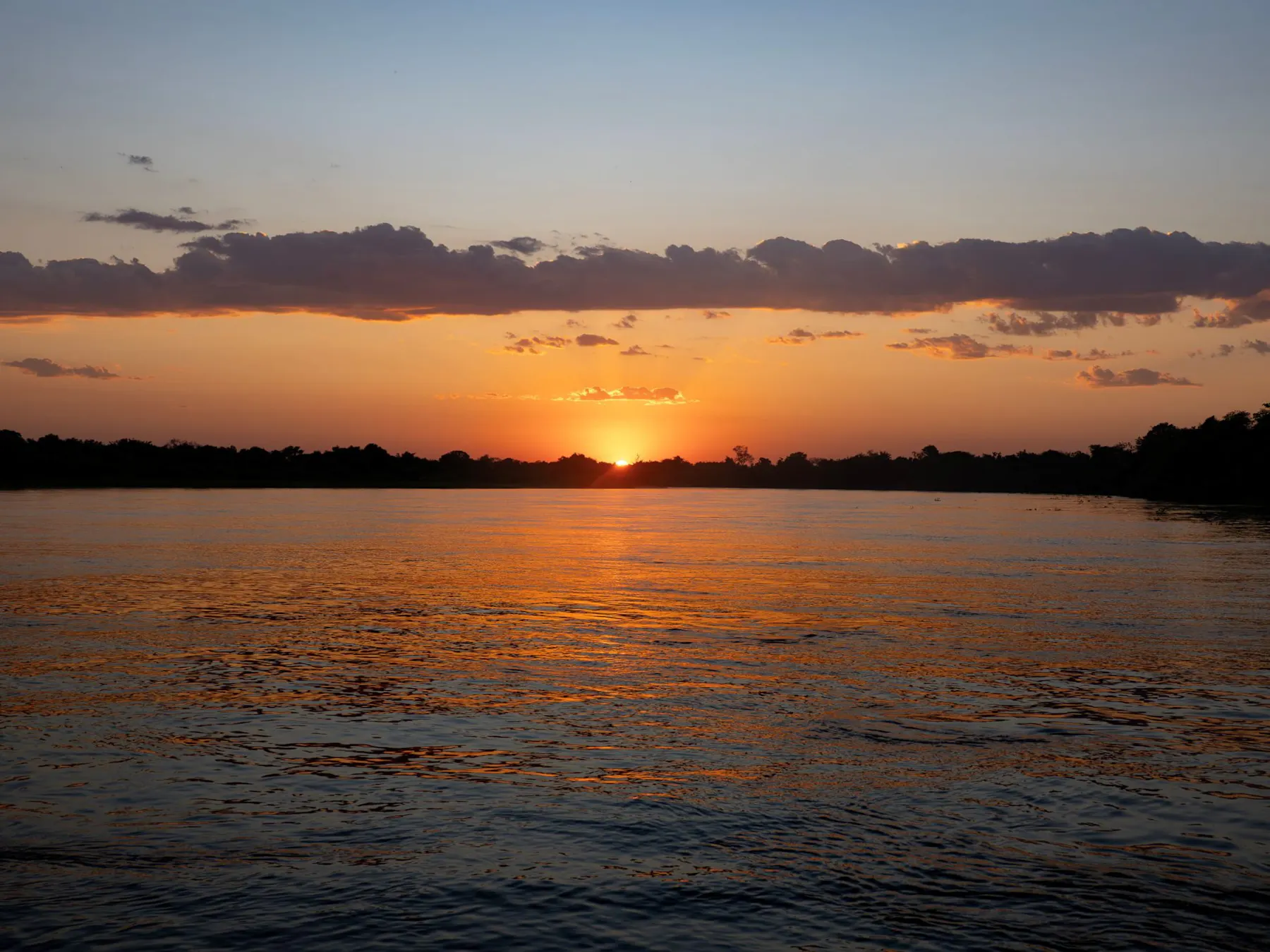
Araras Eco Lodge — Northern Pantanal
The Pantanal Starts Before You Even Unpack
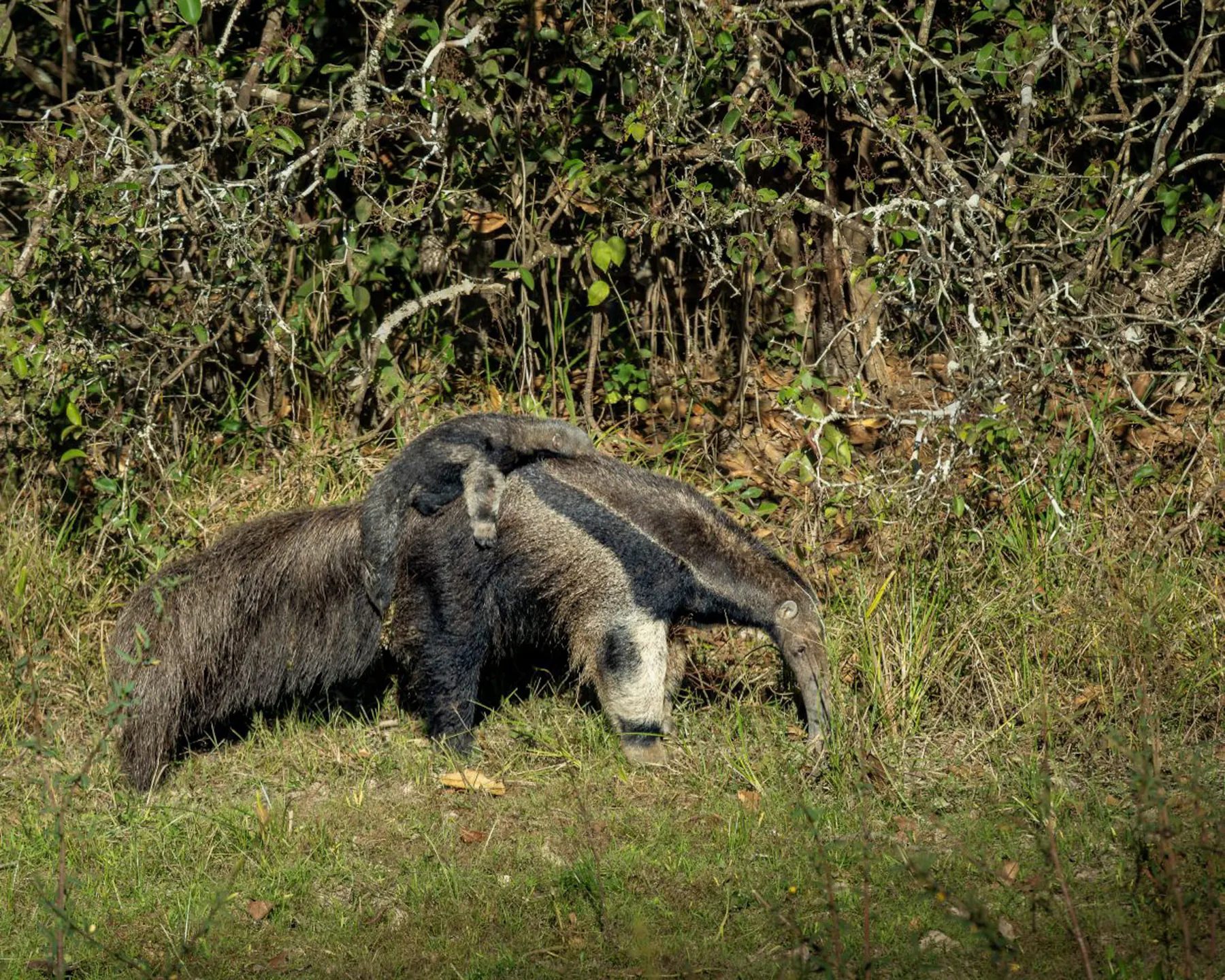
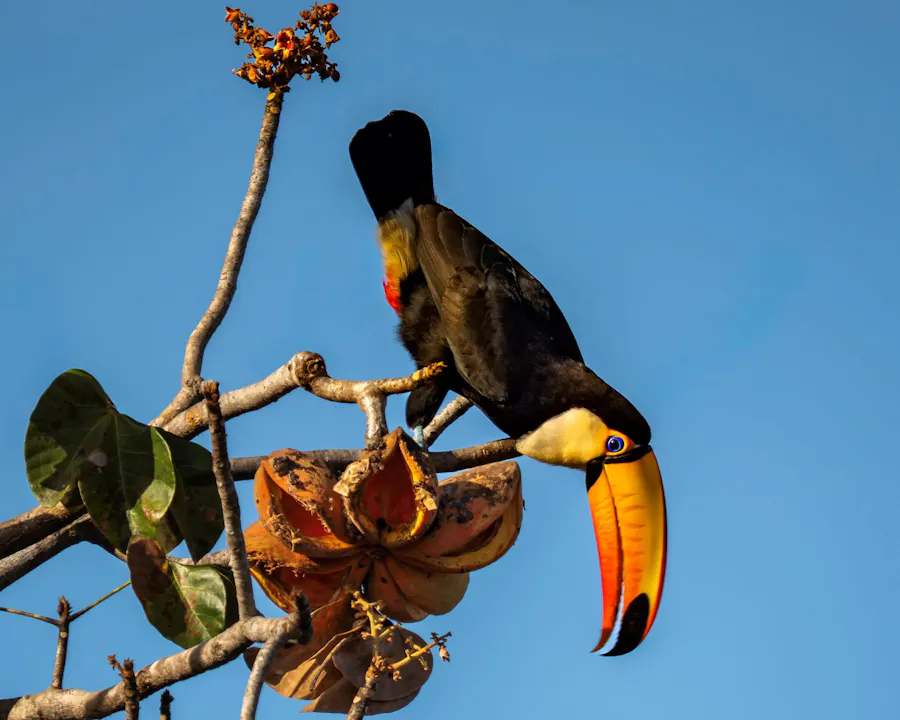
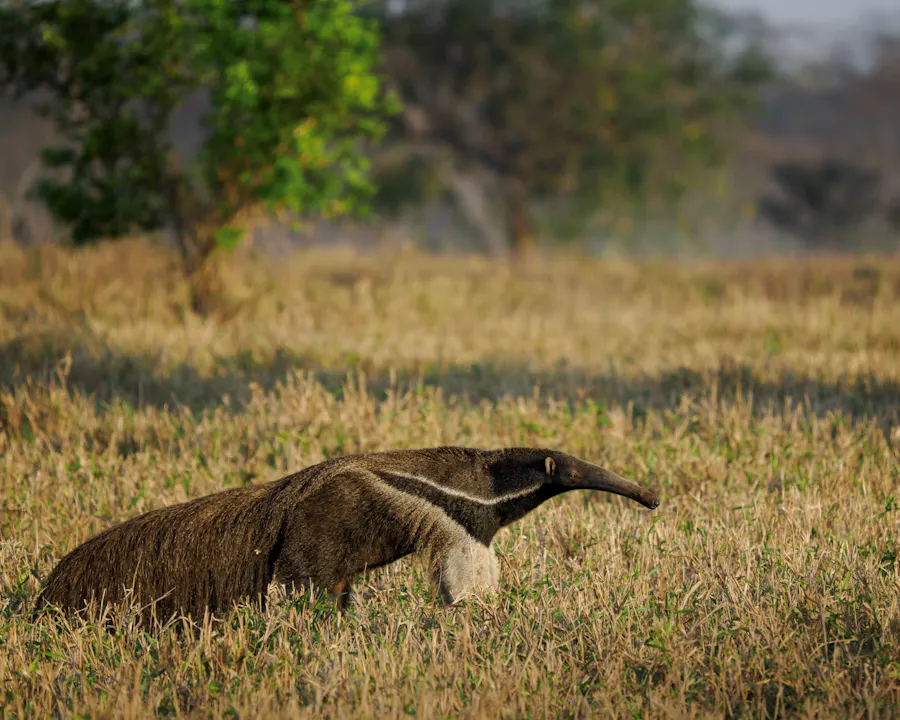
The group flew into Cuiabá and immediately loaded into vans for the drive south along the Transpantaneira Highway — a legendary 93-mile gravel road that cuts through the heart of the northern Pantanal, crossing over 120 wooden bridges above river channels thick with caiman. The wildlife viewing began before anyone had checked in. The van stopped four times on the drive in alone: a giant anteater carrying a baby on its back, walking calmly across open ground while the group scrambled for their cameras; a Toco Toucan perched in full view; a Great Potoo asleep on a fence post; and a roadside cornucopia of Ringed Kingfishers, Snail Kites, Jabiru Storks, and Wattled Jacanas at every pond and river crossing. Bruce noted in his journal that by the time they reached the lodge, he had already seen more species than he expected for the entire first day.
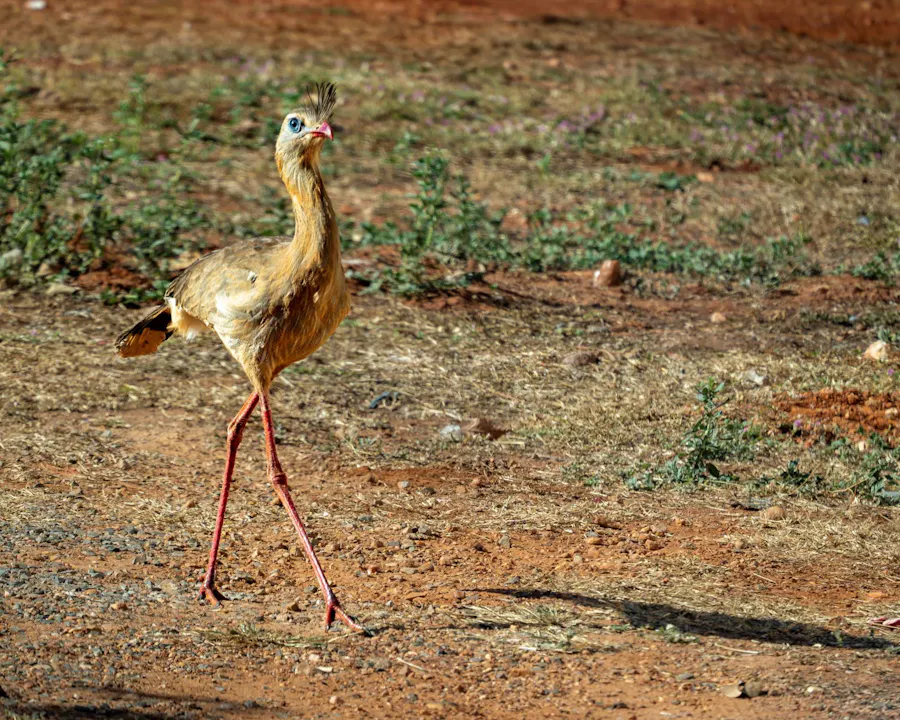
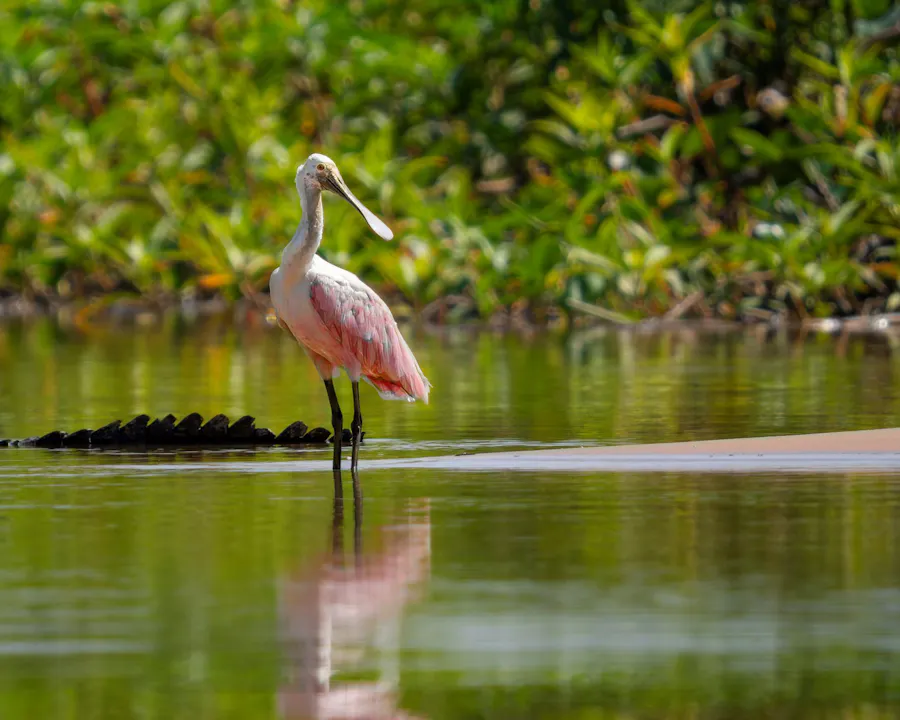
The Araras Eco Lodge is set in the northern Pantanal’s floodplain forest, where morning walks through the grounds turn up species that feel almost impossibly colorful in the early light — Roseate Spoonbills, Red-legged Seriemas, Hyacinth Macaws calling from palm trees overhead, and Virginia’s immediate discovery of a Guira Cuckoo on her solo walk before breakfast. A morning safari ride and an afternoon lecture on the Pantanal’s ecology set the pattern for the days that followed: always on the move, always watching, always learning something specific about the ecosystem from a guide who knew it intimately.
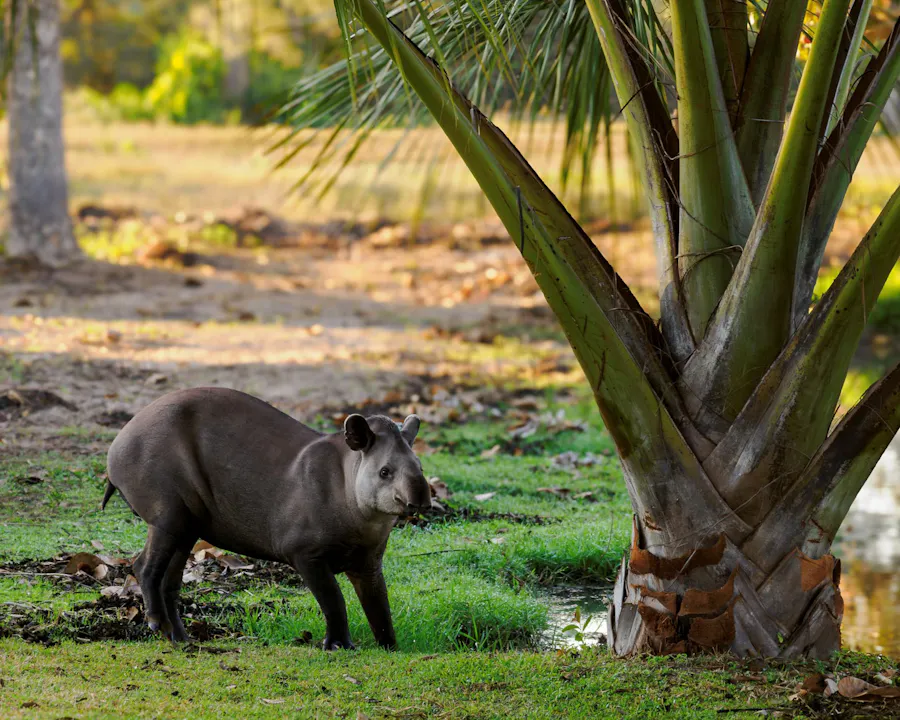
The first tapir sighting came on the grounds during a morning walk — a fleeting look at South America’s largest land mammal, moving deliberately through the brush. Nobody said it out loud, but the group knew immediately: this was going to be a different kind of trip.
“Somewhere along the way we stopped to watch a giant anteater with a baby on its back. By the time we reached the lodge, the bar had already been set.”
Hotel Porto Jofre — Cuiabá River
The Jaguar River: Five Days, Twenty Sightings
Porto Jofre is where the Pantanal becomes something else entirely. At the end of the Transpantaneira, where the road dissolves into the river, the Cuiabá River becomes the safari vehicle. Every morning and afternoon, the group boarded a metal boat with the guide and driver and headed upstream into the narrow river channels where jaguars — more concentrated here than almost anywhere else in their range due to recent fires pushing animals toward the water — patrol the riverbanks like they own them. Because they do.
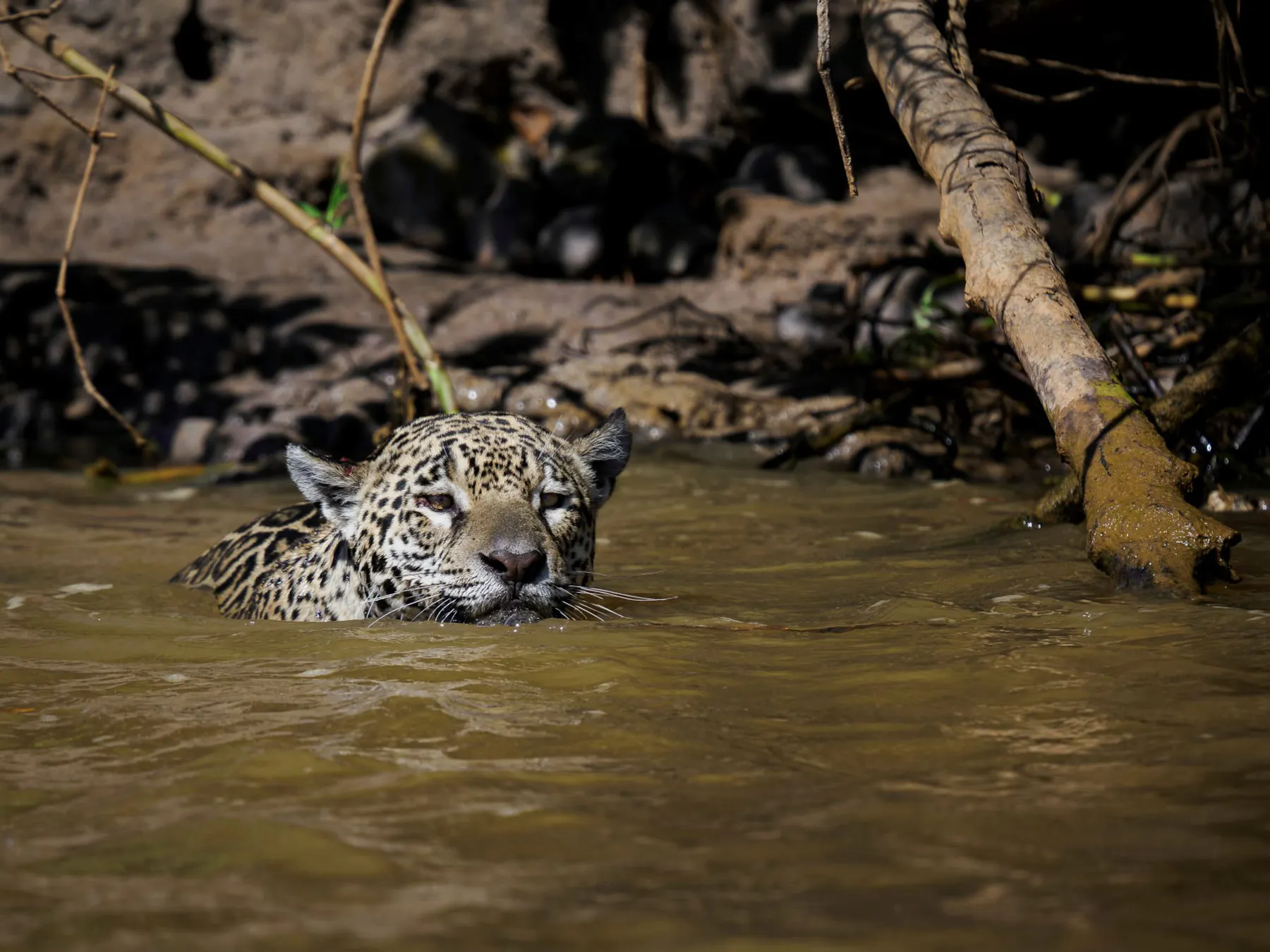
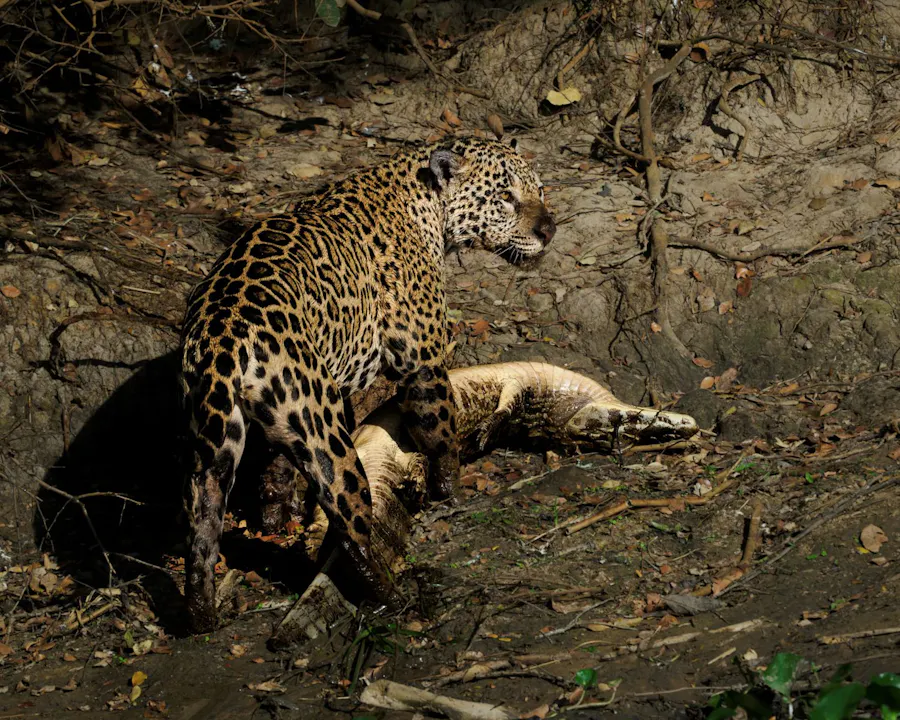
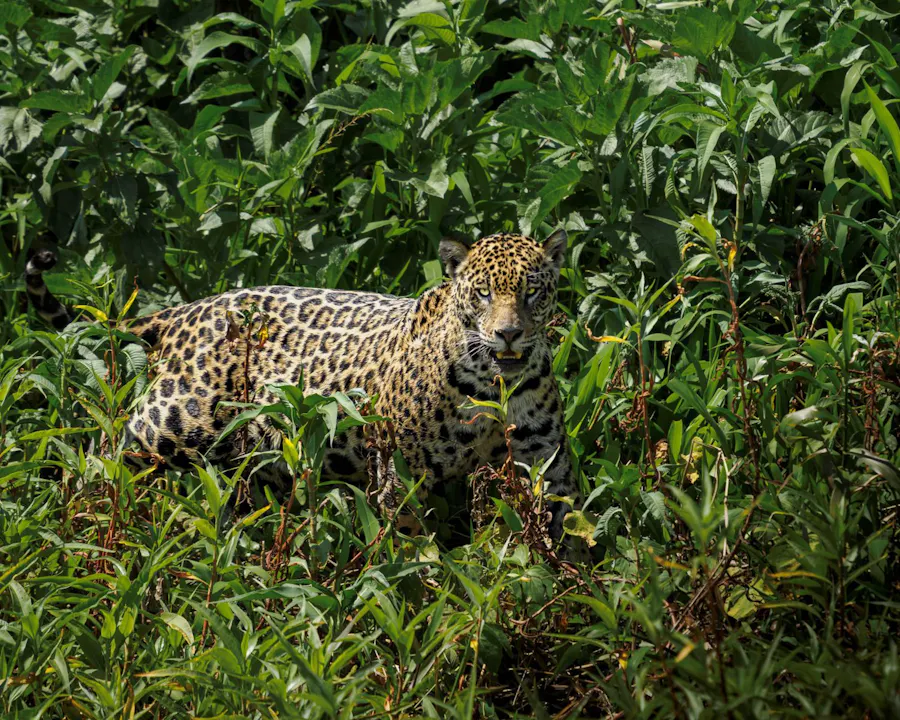
The tally over five days at Porto Jofre: 20 jaguar sightings across 11 individuals, including a pregnant female who swam the full width of the river while the flotilla of boats scrambled to keep up; a collared male rescued from the 2019 fires who hunted caiman in the shallows while 20 boats watched; a pair of siblings — a young male and female from the same litter — seen crossing the road within minutes of each other; and one afternoon’s best sighting: a young male climbed into a tree directly in front of the boat, settled in, and turned his head slowly to look at the cameras. On the single best day, seven separate jaguar sightings from 6:35 a.m. to 5:01 p.m.
The boats share a radio network, and when a jaguar is found, word spreads instantly across the river. The resulting armadas of 15–20 boats converging on a single animal might sound chaotic — and sometimes it is. While there can be at times over a dozen boats of silent watchers, the jaguars are remarkably habituated. They sleep in trees, groom themselves on the bank, and drink from the river with the same focused disinterest they’d show in an entirely empty landscape.
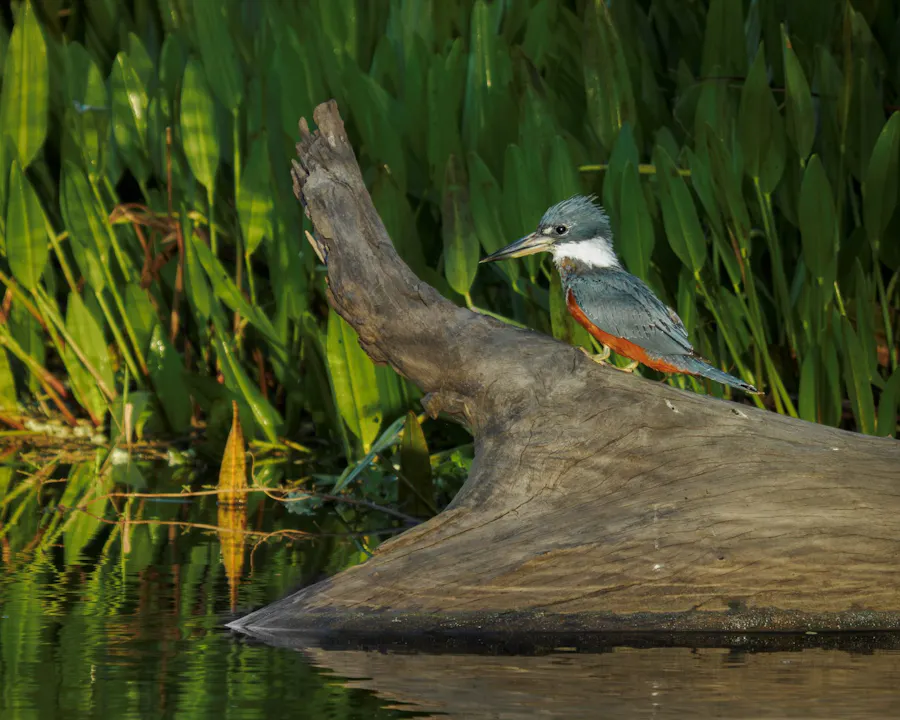
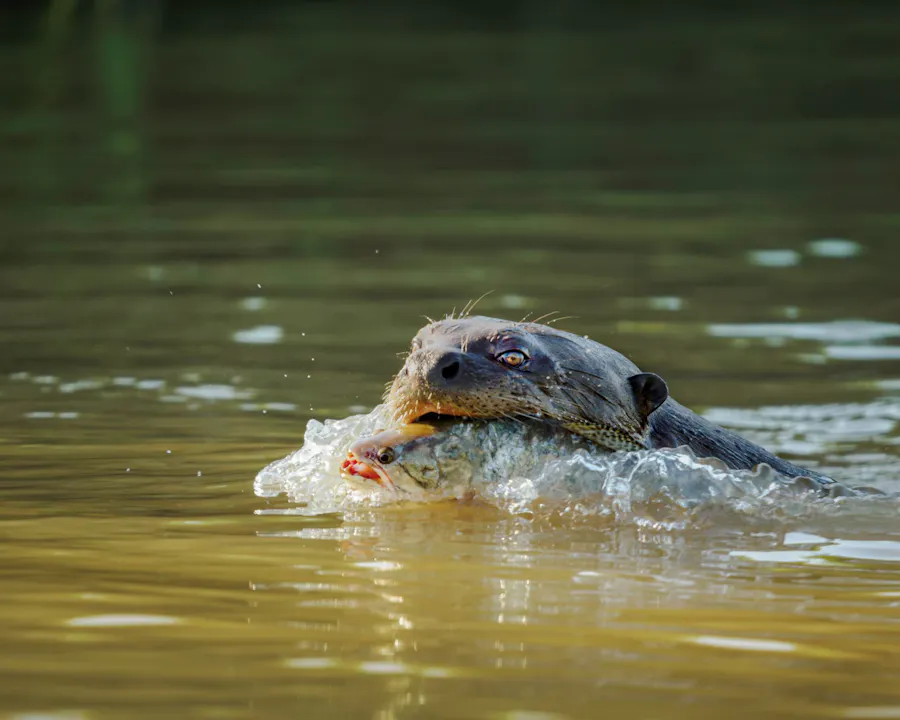
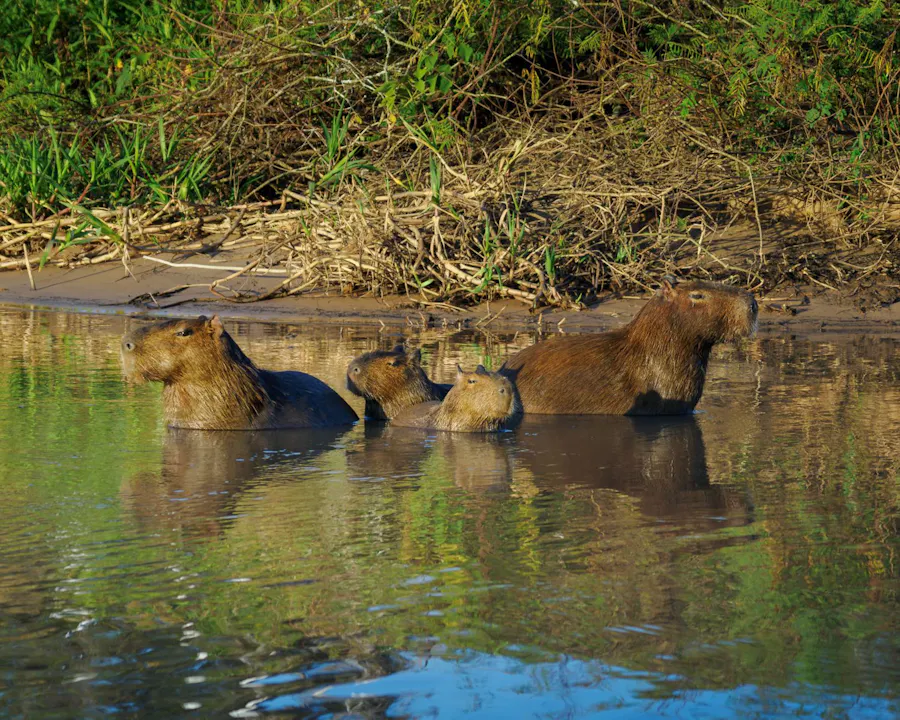
Jaguars are listed as Near Threatened on the IUCN Red List, with up to 50% of their original range now gone — so seeing them this reliably on the Cuiabá is a reminder of just how exceptional the Pantanal remains. Between jaguar sightings, the river delivered: giant river otters in groups of three crunching fish, the sound of bones cracking audible from the boat; howler monkeys in the riverside trees; capybara swimming across the channel; and a kingfisher count that eventually covered all five species present in the Pantanal — Ringed, Amazon, Green, American Pygmy, and Green-and-Rufous — sometimes multiple species in a single scan of the bank.
Conservation in Action
Every Cheesemans’ Brazil departure supports local conservation projects directly — including the researchers you’ll meet in the field.
Brazil & ConservationThe Peccary Project — Southern Pantanal
Conservation on the Ground: Peccaries, Anteaters, and the Fires
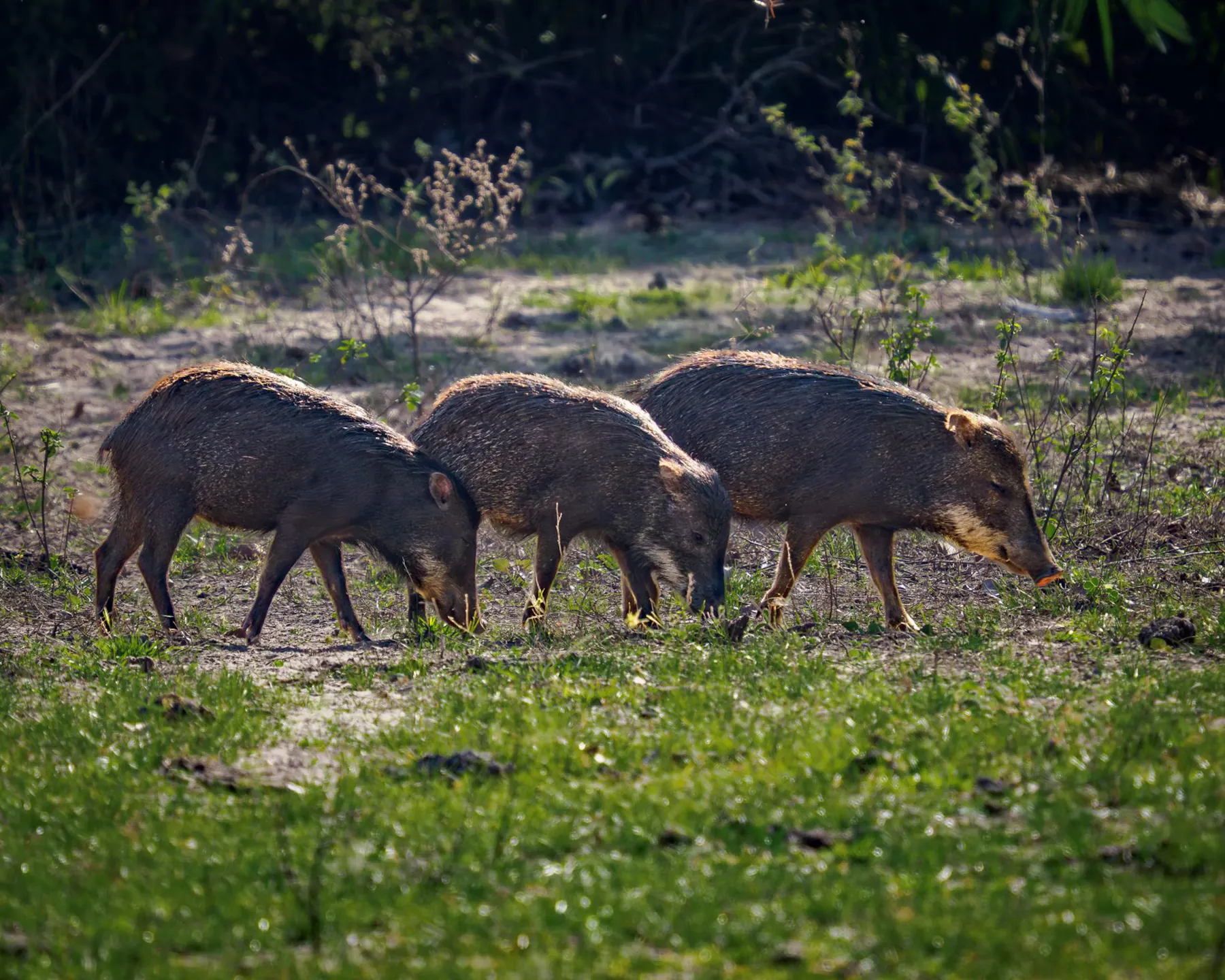
After five days on the river, a charter flight delivered the group to one of the most unusual stops on the itinerary: the Peccary Project, a working conservation research station run by Alexine Keuroghlian, a biologist who earned her PhD in Reno and has spent decades studying the Pantanal’s white-lipped peccary population. The property is hers by lease, and the work she does there — camera-trap monitoring, herd movement studies, habitat assessment across a landscape increasingly fractured by fire — gives the trip a dimension that no amount of jaguar-watching alone can provide.
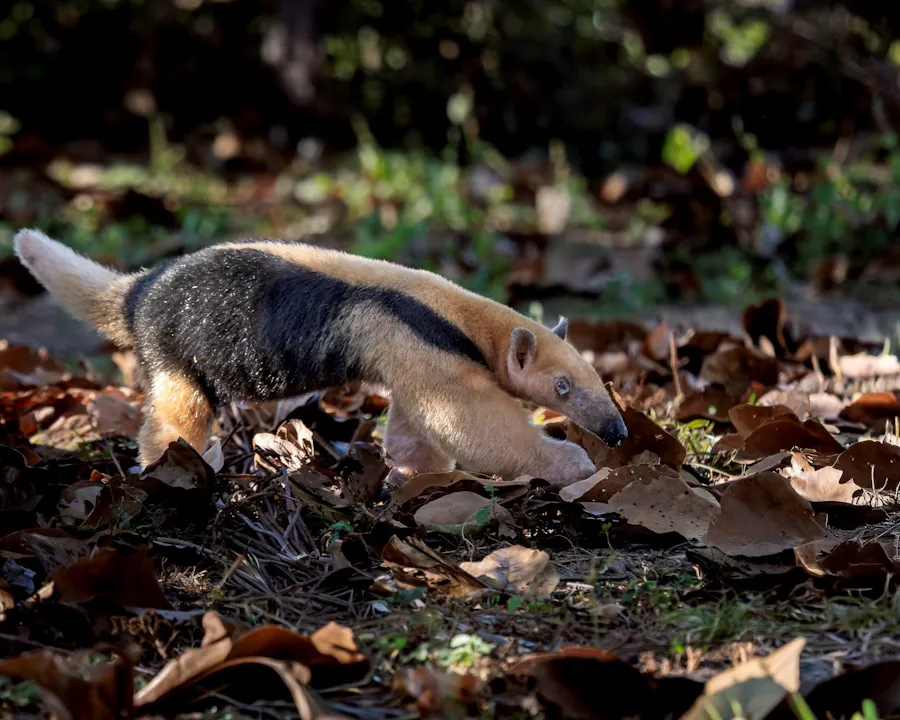
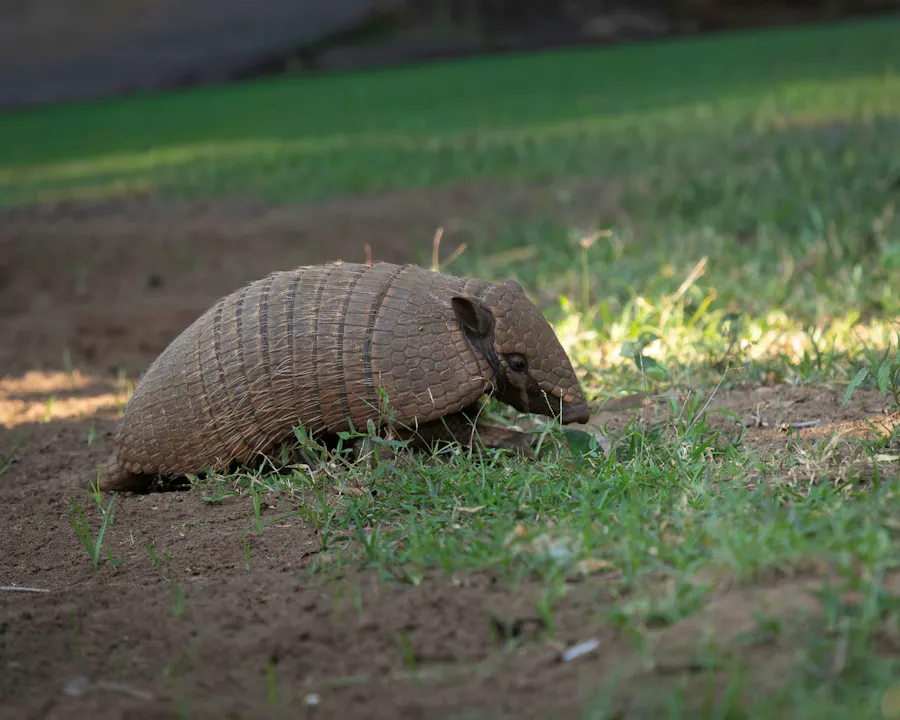
The morning safari delivered: a herd of white-lipped peccaries that started as five animals and grew to nearly 30 as the herd emerged from the jungle in waves; a six-banded armadillo crossing the runway; a tamandua — the mid-sized, partly arboreal anteater — working through the scrub; a pair of Aplomado Falcons perched together in a dead tree; and a collared giant anteater, the monitoring collar tracking its location, temperature, and feeding activity in real time.
The evening’s presentation brought the stakes into focus. A researcher from Instituto Tamandua spoke about the “Orphans of the Pantanal” project, established after the first major fire swept through the region five years ago. The fires — two significant ones in the past five years alone, with the annual burn season growing worse — hit giant anteaters particularly hard. Anteaters need termite mounds to survive, eat roughly 30,000 insects per day, and move slowly enough that fire often overtakes them. The rehabilitation program rescues survivors, feeds them on specially formulated food while staff manually break open termite mounds for insects several times a week, and releases them with radio collars that track location, temperature, and feeding behavior for two years. One recovered animal travelled 60 kilometers into a nearby city before staff retrieved it from someone’s backyard.
Fazenda San Francisco
The Night of the Ocelot — and a Jaguar That Lost Interest in an Anteater
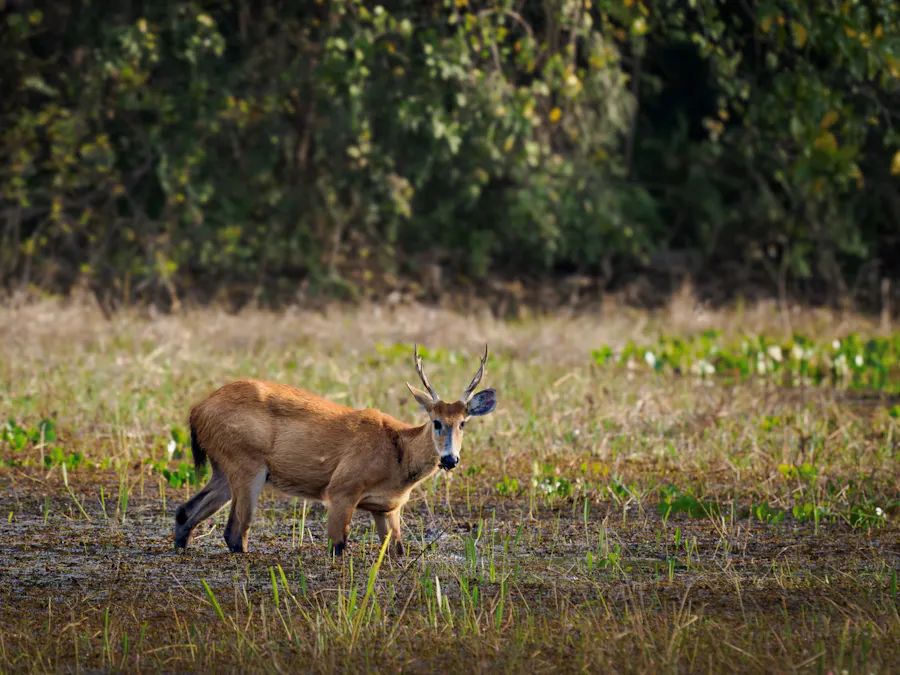
The San Francisco Lodge offered a different texture of Pantanal: drier, more open, with longer drives through grassland and flooded fields where marsh deer, Greater Rheas, and Maguari Storks appeared at first light. The afternoon and night safari on the first full day produced two of the trip’s most extraordinary sightings.
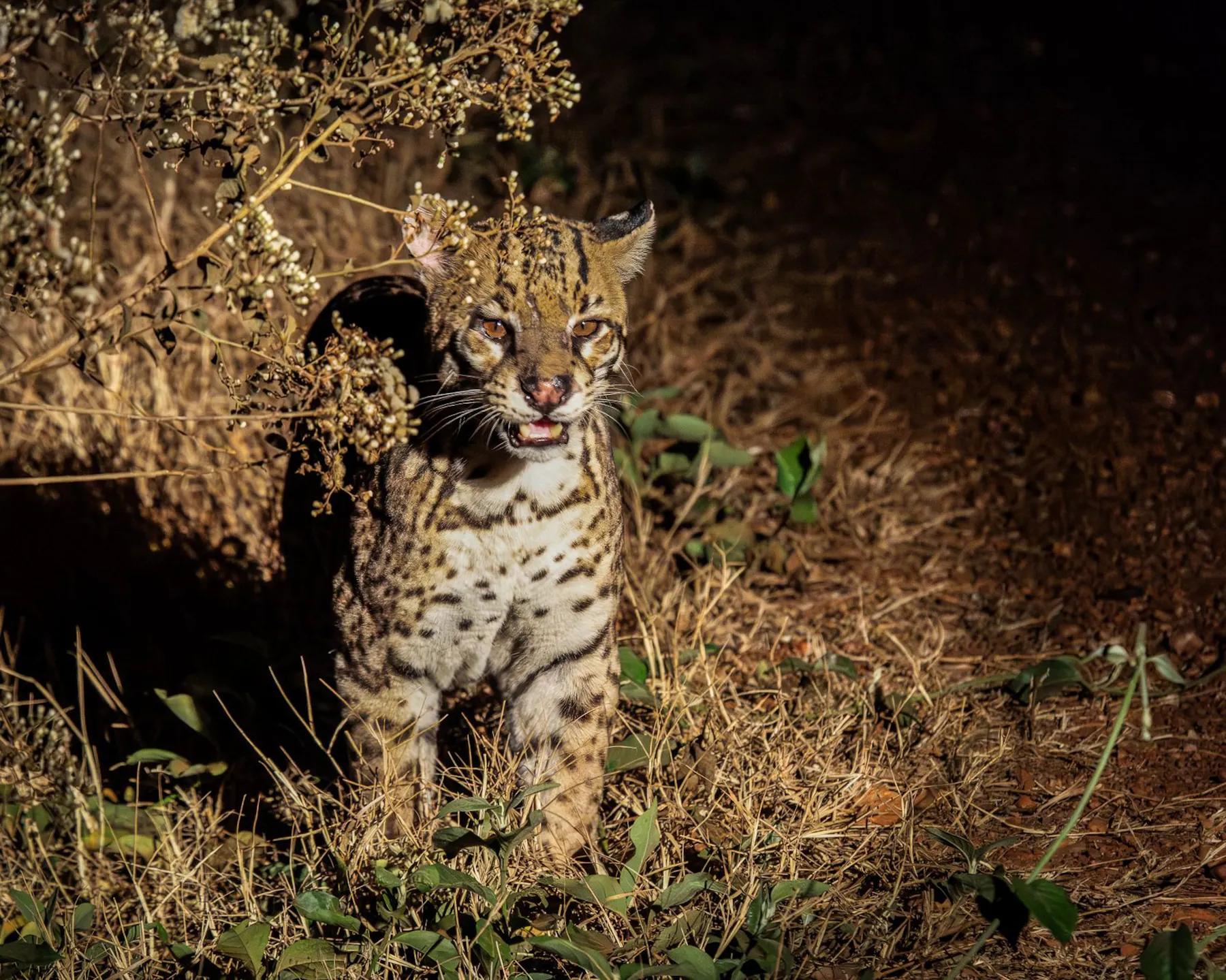
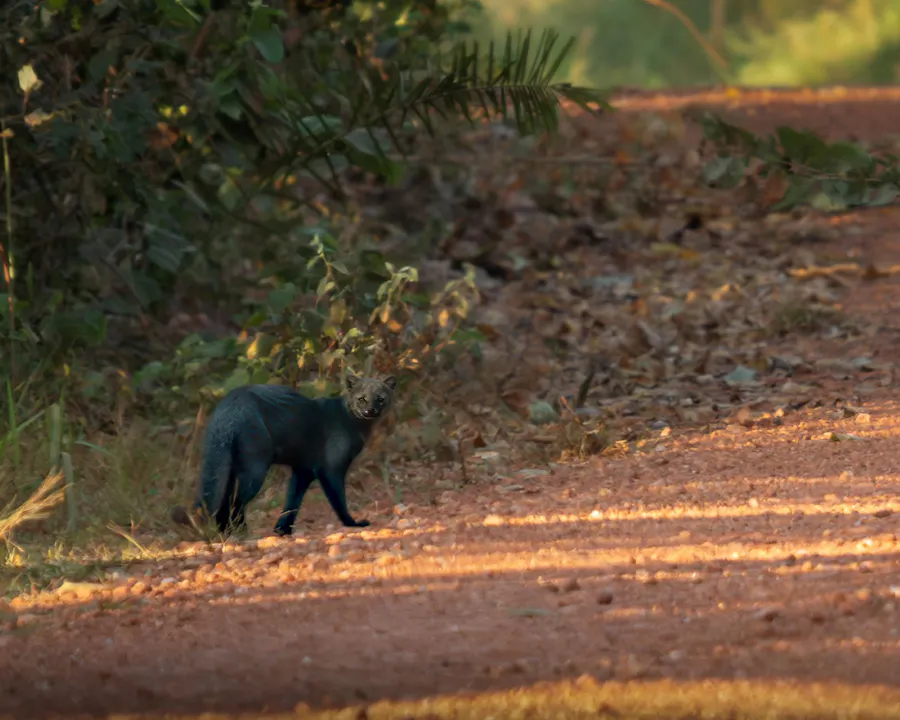
The first was an ocelot — spotted in the brush during the afternoon drive, one of the smaller wild cats and one of the most sought-after on any Pantanal itinerary. Clear views, good light, long enough to photograph. The second was a jaguarundi — an even rarer, shyer cat, dark and quick, walking away from the truck on an open road. “Really rare, really shy, and new to us,” Bruce noted. “A daytime animal, usually black like this one, sometimes brown. Solitary.” Both cats in the same afternoon.
But the moment the group talked about for days afterward came at 5:39 p.m. on the evening drive out of San Francisco Lodge. A jaguar appeared on the road, turned left into the shrubs — and seconds later, a giant anteater burst out of the vegetation on the opposite side and ran across the road with the jaguar just feet behind it. Both animals disappeared into the weeds. The guide’s assessment: a young, curious male who wasn’t seriously hunting, just investigating. Sure enough, a few minutes later the anteater reappeared at the far end of the field, completely unharmed, walking with the same unhurried pace it had before the jaguar noticed it. The jaguar was never seen again.
“Out pops a giant anteater which runs across the road to the right with the jaguar just feet behind it. A few minutes later the anteater appeared unharmed, nonchalantly, at the far end of the field.”
Caiman Lodge — Southern Pantanal
Expert Talks, Hyacinth Macaws, and a Jaguar Carrying a Capybara
The Caiman Lodge is the most polished stop on the itinerary — an Intercontinental property set on 53,000 hectares of private land — and it’s where the conservation work becomes most visible. The Onçafari jaguar project, founded by a Brazilian ex-racing driver inspired by African safari habituation methods, operates here. The group met Diogo Lucatelli, a biologist with 13 years in the Pantanal and the project’s lead researcher, who gave a presentation on jaguar ecology, the habituation program (250 individual jaguars catalogued, 65–75 new individuals identified per year), and the threats the species faces — fires, roads, ranching conflict, and increasingly, demand for jaguar body parts from workers on Chinese infrastructure projects.
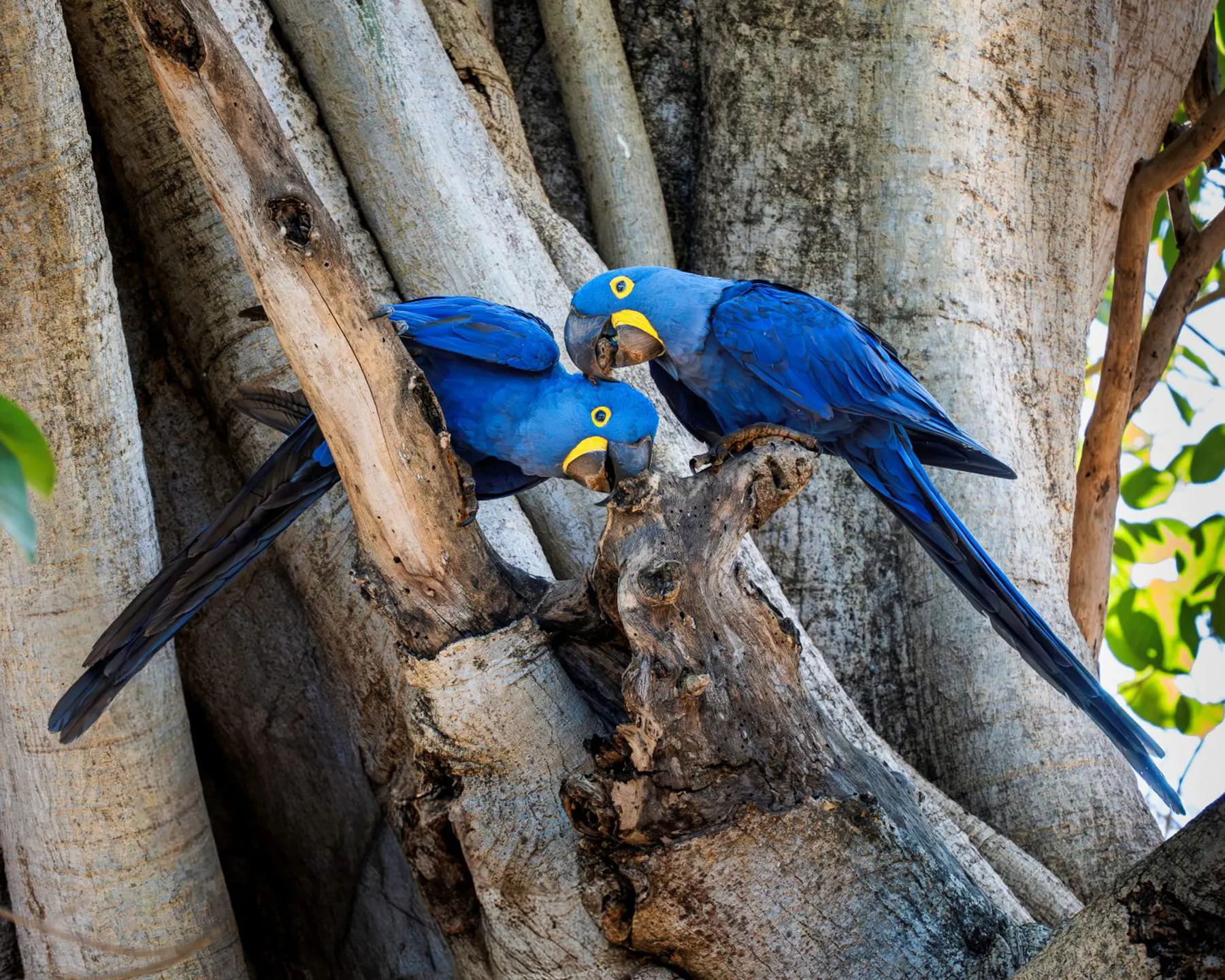
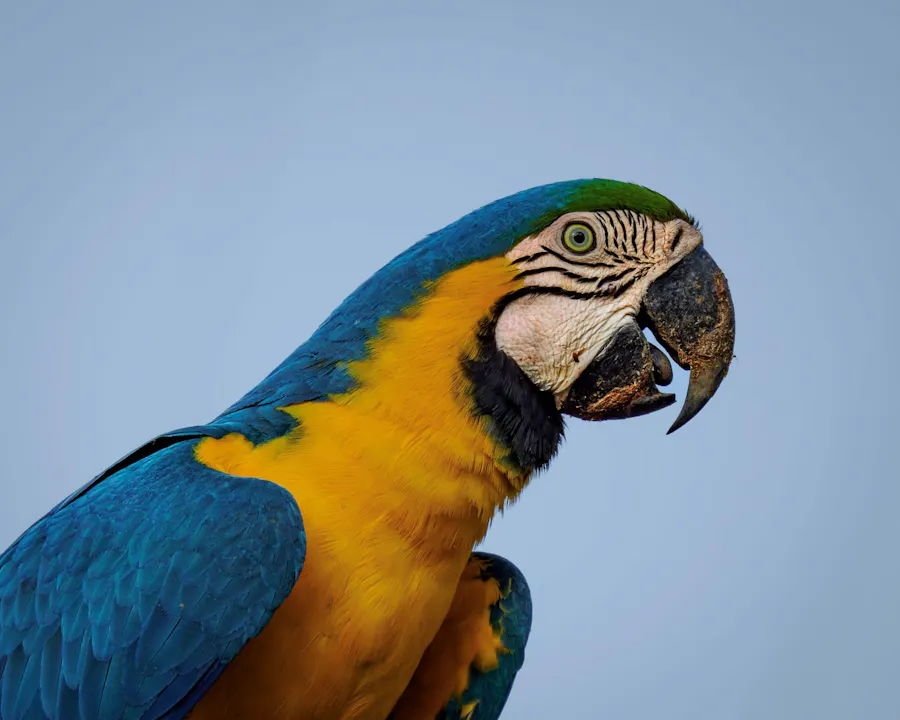
The Hyacinth Macaw Institute also operates on the Caiman property. Maria Eduarda Monteiro presented the project’s work: the population of hyacinth macaws in this region grew from roughly 2,000 birds in 1990 to nearly 6,000 today, almost entirely due to the nest box program. The fires destroyed many of the hollow trees the macaws depend on for nesting. The project builds and maintains over 1,000 nest boxes annually, wraps the lower trunks to prevent predators from climbing, and bands chicks before they fledge. More than 40 species use the boxes. The macaws themselves, which eat almost exclusively the nuts of two specific palm species, depend entirely on the Toco Toucan for seed dispersal — making the toucan, the macaw’s primary nest predator, also its most important ecological partner.
The safari rides at Caiman delivered in every direction. A female jaguar with a six-month-old cub walked alongside the truck so close that Virginia had to pull her camera strap out of the jaguar’s line of sight. A night drive after dinner produced the trip’s final jaguar sighting: a large individual crossing a field carrying a capybara in its jaws. The group followed it to the edge of the jungle. The jaguar walked in without looking back.
The Cheesemans’ Difference
Why the Pantanal Rewards the Cheesemans’ Approach
What separates a Cheesemans’ Pantanal trip from simply booking a lodge and joining whatever boat goes out in the morning is the same thing that defined every section of this itinerary: the right guide, in the right place, with enough time to go deep rather than just wide. Rafael, the group’s leader and naturalist, knew individual jaguars by name, knew which river tributaries to check in which conditions, and knew how to read a radio call in Portuguese well enough to get the boat into position before the other flotillas arrived. He also knew which conservation researchers to trust and how to translate their work into something that made the wildlife sightings feel like part of a larger story rather than isolated spectacle.
The itinerary’s structure — northern Pantanal first, then a charter flight to the southern lodges, then Caiman — covers more ecological range than any single-lodge stay could. Three distinct areas, different wildlife communities, and important conservation projects build a fuller picture of this extraordinary wetland. The Pantanal faces significant challenges, including fire and habitat loss, but it is also a place where conservation is very much alive. Our journey brings us into landscapes where researchers, landowners, lodges, and travelers are helping create a future for jaguars, giant anteaters, and the remarkable diversity of wildlife that lives here.
Learn more about how Cheesemans’ supports conservation in Brazil, and meet the naturalist leaders who make these trips possible.
Frequently Asked Questions
Is the Pantanal better than the Amazon for wildlife?
Hover or tap for the answerFor mammals, yes — significantly. The Amazon’s biodiversity is extraordinary but largely hidden in the canopy. The Pantanal’s open grasslands and river channels put jaguars, giant anteaters, tapirs, giant otters, and hundreds of bird species right in front of you. The two destinations offer very different experiences.
What are the odds of seeing a jaguar?
Hover or tap for the answerVery high on the Cuiabá River near Porto Jofre — our 2025 group logged 20 sightings in five days, including 7 in a single day. Jaguar sightings are not guaranteed anywhere, but the northern Pantanal offers better odds than almost anywhere else in their range.
What is the “Big Five” of the Pantanal?
Hover or tap for the answerJaguar, giant anteater, giant river otter, ocelot, and lowland tapir. Our 2025 group saw all five. The giant anteater and giant river otter were seen on multiple occasions; the ocelot and jaguarundi — a bonus sixth wild cat — appeared in the same afternoon at San Francisco Lodge.
What’s the best time of year to visit?
Hover or tap for the answerJuly through September is the dry season, when animals concentrate around remaining water sources and the tall grasses are lower — both make wildlife much easier to find. This is when jaguar sightings on the Cuiabá River peak. The wet season (November–March) offers lush landscapes but denser vegetation and more dispersed wildlife.
How physically demanding is the trip?
Hover or tap for the answerModerate. Most wildlife viewing is from safari vehicles or boats with seating. Morning and afternoon drives are long — 4–6 hours each — so stamina helps. The heat in August can be significant. Good insect repellent is essential; mosquitoes are serious, especially at dusk.
Is birding good in the Pantanal?
Hover or tap for the answerExceptional. The Pantanal hosts over 650 bird species. Highlights from this trip included Hyacinth Macaws, Toco Toucans, Jabiru Storks, Roseate Spoonbills, five species of kingfisher, Greater Rheas, Red-legged Seriemas, and the spectacular Blue-and-gold Macaw and Sunbittern. Serious birders often extend this trip.
Experience · Learn · Protect
The Pantanal: Jaguars, Giant Anteaters, Wild Otters, and the Conservation Work Keeping It All Alive
See Brazil DeparturesTrip notes and photography by Bruce Whittaker and Virginia Robbins, Cheesemans’ guests, August 2025. All wildlife photographed ethically from marked roads and licensed waterways with certified naturalist guides. Thank you, Bruce and Virginia, for sharing your remarkable record of this journey.